Easy DIY Wheat Wreath for Fall and Harvest Décor
8 min read ·
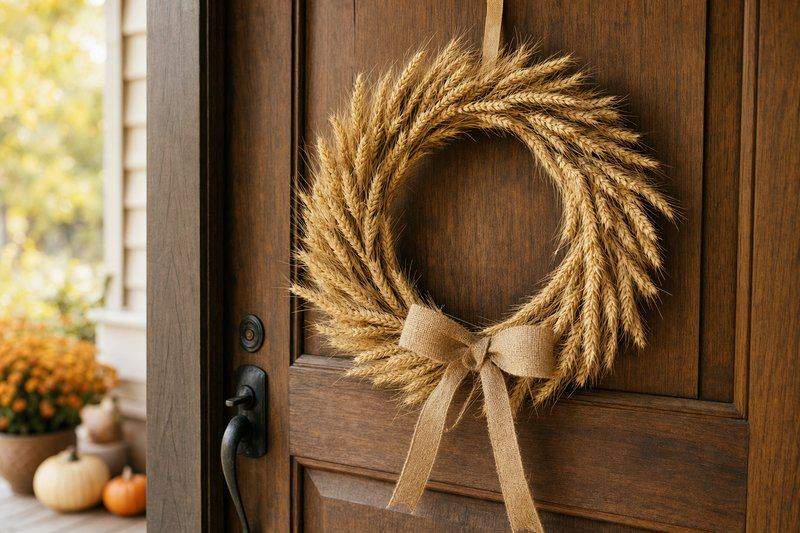
Wheat has a warm, golden color that reads as harvest season the moment it goes up, and a wheat wreath is one of the simplest ways to bring that look to a front door without any fresh-flower upkeep. This walks through building a full wheat wreath from bundled stalks, shaping it so the bundles sit evenly, and a few ways to dress it up beyond the plain wheat itself.
What You Need
- Dried wheat stalks (available at craft stores or floral suppliers, usually sold in bundles)
- A wire wreath form, 12 to 16 inches across
- Floral wire
- Scissors or wire cutters
- Twine, raffia, or ribbon for wrapping and accents
- Optional: a hot glue gun for securing loose ends
Dried wheat is lightweight and inexpensive by the bundle, so a single wreath rarely uses more than one or two bundles depending on how full you want the finished piece to look.
Step-by-Step: Building the Base
- Divide the wheat stalks into small bundles of 8 to 10 stalks each, trimming the cut ends so they’re roughly even.
- Wrap floral wire tightly around the base of each small bundle, about an inch up from the cut ends, twisting to secure.
- Wire each bundle onto the wire wreath form, overlapping the head (grain) end of one bundle over the wired base of the last one as you work around the ring.
- Continue around the entire form until the wire base is fully covered by overlapping wheat bundles.
Working in small, consistent bundles keeps the finished shape even and makes it much easier to fix any one section that looks thin.

Shaping and Securing the Wheat Bundles
Once the ring is fully covered, go back around and gently fan out the grain heads so they sit at a slight angle and never lie completely flat, which gives the finished wreath more visual depth. Any stalk that pokes out awkwardly can be trimmed individually with scissors, since pulling risks loosening the wire underneath. A small dot of hot glue at any spot where a bundle feels loose adds extra security without needing to rewire the whole section.
Adding Ribbon, Raffia, or Twine Accents
A wide ribbon bow at the top or bottom is the simplest way to add a focal point, and burlap, raffia, or a natural jute ribbon all suit the wheat’s rustic texture better than a glossy synthetic ribbon would. Wrapping a length of raffia or twine around the center of the bundles, spaced every few bundles around the ring, adds a woven texture detail without covering up the wheat itself. For a slightly dressier version, a few small dried flowers (baby’s breath or dried lavender) wired in among the wheat bundles adds color without moving too far from the natural, harvest-season look.

Choosing Real vs. Faux Wheat
Real dried wheat has a genuine texture and a slightly uneven, natural look that faux wheat can’t fully match, and it’s usually the cheaper option too. The tradeoff is durability: real wheat can shed a few grains over time and is more brittle in humid climates, where a covered porch keeps it in better shape than full outdoor exposure. Faux wheat, made from dyed dried grasses or silk-style materials, holds up to weather and handling better and can be reused for several seasons, which is worth the higher upfront cost for anyone hanging a wreath somewhere fully exposed to rain.
Where to Hang a Wheat Wreath
A front door is the obvious spot, but a wheat wreath’s neutral, warm-toned palette also works well hung over a mantel, on a pantry door, or as a centerpiece backdrop for a harvest-themed table. Because wheat doesn’t have the bright seasonal colors of a typical fall or Halloween wreath, it also reads as appropriate for the whole autumn stretch, which makes it a good choice for anyone who wants one wreath to cover September through Thanksgiving.
Protecting a Wheat Wreath From Weather
A covered porch or entryway extends a real-wheat wreath’s life significantly compared to full sun and rain exposure. A light coat of clear matte spray sealant, applied before hanging, adds some water resistance without changing the wheat’s natural color or texture. Bringing the wreath inside during heavy rain, which no wreath survives an entire wet season without, is the single best way to keep real wheat from getting brittle and shedding early.
Storage for Next Year
Between seasons, a wheat wreath stores best in a large flat box or a garment bag, never a tightly sealed plastic bin, since a little airflow helps prevent any trapped moisture from causing mold on the dried stalks. Storing it flat also helps the bundles keep their shape, with no sagging under their own weight over months of storage.
Troubleshooting Common Problems
A few issues tend to come up more than others when building a wheat wreath, and each has a straightforward fix. If the finished ring looks patchy or thin in one spot, that section usually just needs an extra bundle or two wired in on top of the existing coverage, and no attempt to spread the current bundles further apart. If grain heads keep snapping off during handling, the wheat may be over-dried or old stock; slightly fresher bundles hold up better to the bending and wiring involved in construction. A wreath that looks flat and one-dimensional from a distance usually benefits from more aggressive fanning of the grain heads at the shaping stage, since that step is easy to underdo on a first attempt.
Pairing a Wheat Wreath With Other Seasonal Touches
A wheat wreath’s neutral, warm palette makes it an easy anchor piece for a broader fall entryway or table display, so it doesn’t have to carry the whole look alone. A few small pumpkins or gourds on a porch step below the wreath, or a coordinating table runner in a similar tan or cream tone, extend the same look without needing to match colors exactly. Because wheat doesn’t compete with brighter seasonal colors the way a red or orange wreath might, it also pairs easily with whatever specific fall colors a household already leans toward.
Making a Mini Wheat Wreath for a Table or Wall
The same bundling technique scales down easily for a smaller accent piece. A 6 to 8 inch wire or grapevine form uses proportionally smaller bundles (4 to 5 stalks each instead of 8 to 10), and the whole build takes a fraction of the time of a full door-size wreath. A mini version works well laid flat as a table centerpiece base for a candle or small pumpkin, or hung as a secondary accent on a kitchen cabinet or interior door alongside the main front-door wreath. Because it uses so little material, a mini wheat wreath is also a reasonable way to test a color or accent combination before committing wheat bundles to the full-size version.
Dyeing or Tinting Wheat for a Different Color Palette
Natural wheat’s warm gold tone suits most fall palettes on its own, but a light wash of diluted craft paint or wood stain, brushed on and wiped back before it fully dries, can shift the tone warmer, cooler, or more weathered without hiding the stalk’s natural texture. A whitewash effect (white paint heavily diluted with water) reads more farmhouse or winter than harvest, which is worth considering for anyone wanting to keep the same wreath up past Thanksgiving into a neutral winter look. Any tinting is easiest done on the bundles before wiring them onto the form, since loose stalks dry faster and more evenly than a fully assembled wreath would.