Find Your Nail Polish Palette
Pick a mood and your skin undertone, and we'll put together a coordinated color palette worth trying next.
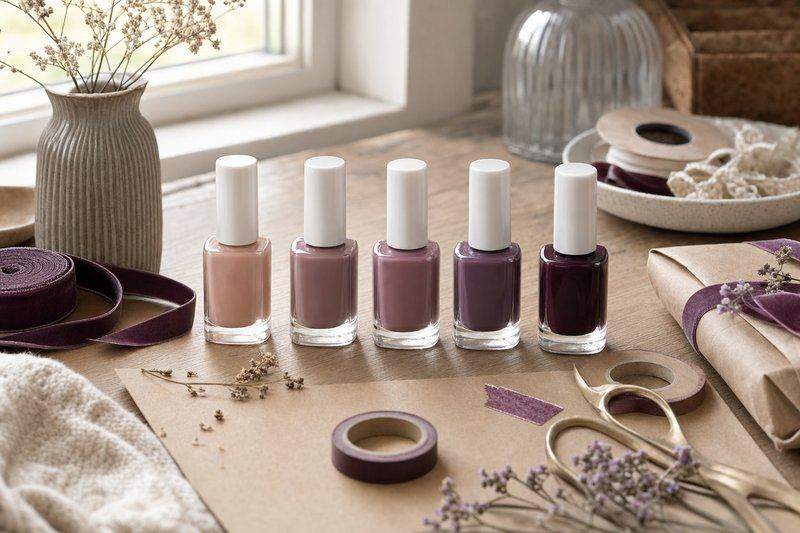
Picking nail polish shades one at a time in a store can turn into more guesswork than it needs to be. A palette generator solves a narrower problem: instead of choosing four separate colors and hoping they read as a set, you pick a mood and an undertone once, and get a small group of shades that were chosen to sit well together from the start.
Skin undertone is the part most people skip past, but it's often the difference between a color looking effortless and looking slightly off. Warm undertones, skin with more yellow or golden cast, tend to pull well toward corals, golds, and warm reds. Cool undertones, more pink or blue cast, usually pair better with berries, jewel tones, and icy pastels. Neutral undertones sit between the two and can usually wear either direction, which is why a neutral-undertone palette leans toward balanced, versatile shades, with no strong lean either way.
Mood works as the second filter on top of that: soft and romantic, bold and vibrant, or natural and minimal each pull from a different part of the color wheel regardless of undertone. Combining the two gives a palette that's coordinated in two directions at once, not a mood that clashes with your undertone or an undertone-safe pick that doesn't match the look you're going for. None of the swatches shown are tied to a specific brand; they're meant as a starting reference to bring along when shopping, whether that's in person or scrolling a polish site.
Not sure? Check the veins on your wrist in natural light: greenish reads warm, blueish reads cool, a mix of both reads neutral.
How the Palette Generator Works
Mood sets the overall feel of the palette, soft and romantic, bold and vibrant, or natural and minimal, and undertone (warm, cool, or neutral) adjusts which specific shades within that mood actually flatter your skin. The two combine, they don't compete: a bold-and-vibrant mood on a warm undertone leans toward coral and gold-based reds, while the same bold mood on a cool undertone shifts toward berry and blue-based reds, so two people picking the same mood can walk away with genuinely different palettes.
A generated palette works best as a starting point, not a strict shopping list. If one shade in the set doesn't match a polish already on hand, swapping it for the closest match in the same family (same warmth, similar depth) keeps the palette coherent without needing every color to be an exact hex match. Undertone is also worth double-checking against the inside of your wrist in natural light if you're unsure, since indoor lighting can make a neutral undertone read as slightly warm or cool.
There's also no wrong answer if a mood you'd normally skip happens to produce a palette you like: the mood question is meant to set a direction quickly, not to box a result into only what you already expected. Trying two different moods on the same undertone side by side is a quick way to see how much the undertone alone is doing versus the mood, which can make picking a final polish easier the next time you're standing in front of a display without this page open.