What Not to Toss: Simple Ways to Repurpose Household Items
9 min read ·
Not everything headed for the trash actually needs to go there. A surprising number of household items that seem past their useful life still have one more use in them, often with barely any extra work. This covers a handful of the most common candidates: old shoes, worn linens, leftover wrapping supplies, outgrown clothes, and a few broken household items worth a second look before they hit the bin.
Old or Worn-Out Shoes
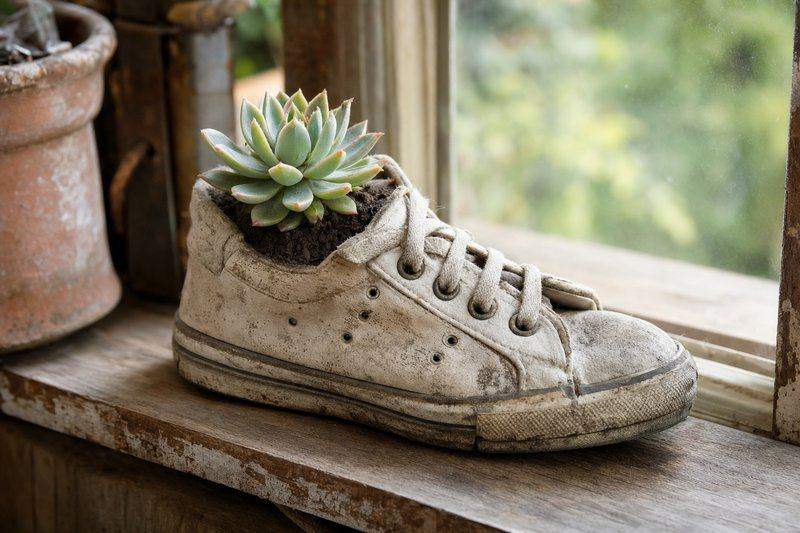
Shoes with holes or a worn-out sole aren’t always a total loss. A shoe with a small hole but a still-intact sole can become a quirky planter for a small succulent or herb, with a few drainage holes punched in the bottom. Old sneakers, cut apart at the seams, can be repurposed as knee pads for gardening, taped or velcroed on over pants. For anything truly beyond reuse, many shoe brands and some recycling programs accept old shoes specifically for material recycling, so they never reach a landfill.
Worn-Out Towels and Linens
A towel too thin or stained for regular use still has plenty of life as a cleaning rag, cut into smaller squares and kept in a bin under the sink for spills and quick wipe-downs. Old bedsheets, cut into strips, work as plant ties in a garden or as padding material when packing fragile items for storage or a move. A stained but structurally sound towel can also be repurposed as a pet bed liner, since washability matters more than appearance for that use.

Leftover Wrapping Paper and Ribbon
Small scraps of wrapping paper too small for an actual gift still work well for craft projects: lining the inside of a drawer, covering a small box for storage, or as collage material for a kids’ art project. Ribbon scraps, even short lengths, can be tied onto a gift tag, used as a bookmark, or saved specifically for smaller gift-wrapping jobs like a jewelry box that doesn’t need a full-length ribbon.

Outgrown Kids’ Clothes
Clothes too small for one child but still in good condition are an obvious hand-me-down or donation candidate, but items with a stain or small tear that rule out donation still have options: cutting a favorite outgrown t-shirt into a small quilt square or a stuffed keepsake pillow preserves the memory in a new form. Worn-out clothes past even that point can be cut into rags for household cleaning, the same way old towels can.
Broken Household Tools and Odds and Ends
A tape measure with a broken retraction spring can still work manually if the tape itself is intact, or the tape can be repurposed as a straightedge guide for craft projects. A broken umbrella’s fabric canopy, if the material itself is still waterproof, can become a small drawstring bag or a rain cover for an outdoor cushion. Even small broken items are worth a quick “is any part of this still useful” check before assuming the whole thing is trash.
Leftover Holiday and Party Supplies
Leftover glitter, small candy pieces, or craft supplies from one holiday’s party often work fine for an entirely different occasion’s crafts, since a specific color scheme rarely matters for general kids’ craft projects. Leftover treat bags or small favor boxes, if left plain or without holiday-specific printing, store easily for the next party, with nothing purchased fresh each time.
General Principles for Deciding What’s Worth Keeping
A few questions help sort what’s actually worth repurposing from what’s genuinely time to let go of: does the material itself (fabric, plastic, metal) still function even if the item’s original purpose is gone? Is the repurposed use something that will actually get used, not just stored as a “someday” project? And realistically, is there space to store it until that use comes up? An item that fails all three questions is usually better off actually discarded (or recycled where possible) rather than kept out of guilt alone.
Where to Store “What Not to Toss” Items Until You Use Them
A single designated bin or drawer for repurposing candidates keeps these items from spreading loose around the house while waiting for their next use. Sorting that bin every few months, and being honest about anything that’s sat unused since the last check, keeps this from quietly becoming its own clutter problem in place of solving one.
Repurposing for Home Use Versus Donating
Not every item on this list needs to be repurposed at home; plenty are just as well handled by donating them to someone who can use them as-is. The dividing line usually comes down to condition: items with a stain, small tear, or cosmetic flaw that would keep a charity from accepting them are the better candidates for a craft repurpose, while anything still fully functional and presentable is often more useful donated whole than cut apart or converted into a version fewer people would want.
Building a Habit Around This Instead of a One-Time Sort
The real value in a “what not to toss” mindset comes from applying it as items reach the end of their original use, not from one big decluttering session that tries to catch everything at once. Pausing for a moment before something goes in the trash, asking whether the material itself still has a use even if the item’s original purpose doesn’t, becomes a quick habit once it’s done a few times.
Glass Jars and Kitchen Containers
Empty jars from pasta sauce, jam, or pickles clean up easily with hot soapy water and a soak to loosen any stuck-on label glue, and hold up well as pantry storage for bulk dry goods, small hardware like screws and nails, or a rinse cup for craft brushes. A jar with a wide mouth works better for anything that needs to be scooped out with a hand or spoon, while a narrower jar suits pouring liquids or loose small items like buttons or beads. Mismatched jar sizes and shapes look intentional once a few are grouped together on an open shelf, which is a reasonable option for anyone who doesn’t want to spend time hunting for a uniform matching set.
Small Broken Appliances and Electronics
A small appliance that no longer works as intended isn’t always a total loss before it goes to e-waste recycling. A broken toaster or coffee maker sometimes has a still-functional cord or a usable dial or knob that’s worth removing before the rest goes to disposal, especially for anyone who does other small-appliance repairs and keeps a parts bin. For anything with no salvageable parts, most areas have a dedicated e-waste recycling stream separate from regular trash, since small appliances and electronics often contain materials that shouldn’t go into a standard landfill bin at all.
Cardboard Boxes and Packaging Materials
Sturdy cardboard boxes, especially ones that held appliances or furniture, are worth keeping longer than the trash pickup schedule suggests. A flattened box makes free weed-blocking material under a layer of mulch in a garden bed, doubles as a large flat surface for painting projects that need protection underneath, or becomes moving-day packing material for anyone with an upcoming move already planned. Bubble wrap, packing paper, and foam inserts that arrive with online orders are just as reusable: saved in a designated bag or bin, they cover the next few packages that need to be shipped or the next fragile item that needs padding for storage, so nothing has to be purchased new each time.