Easy Turkey Cookies Kids Can Help Decorate for Thanksgiving
7 min read ·
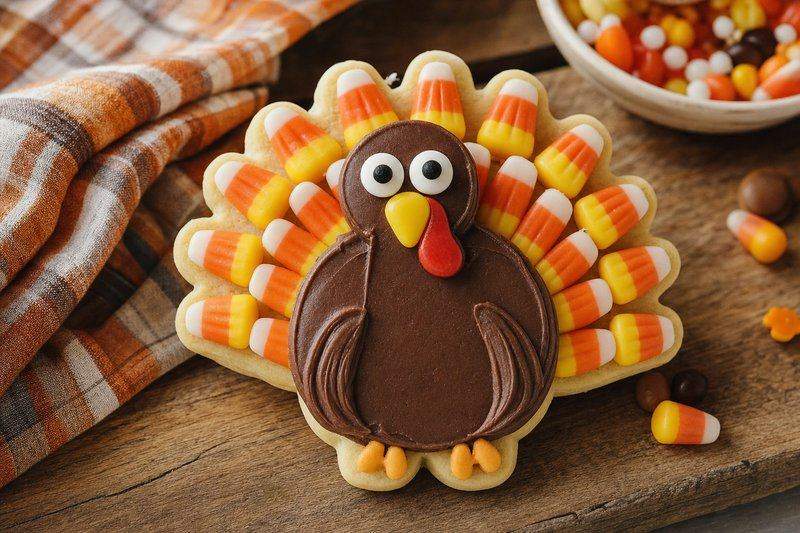
Turkey cookies are less about baking skill and more about assembly, which is exactly what makes them a good Thanksgiving activity for kids to help with. A plain round cookie becomes a turkey body, and the rest comes together with icing and a few pantry staples for feathers, a beak, and eyes.
What You Need
- Round sugar cookies or chocolate sandwich cookies, one per turkey
- Candy corn (for feathers) or thin pretzel sticks as an alternative
- Chocolate icing or melted chocolate (for the base coat and to attach pieces)
- A small orange candy piece or a triangle cut from fruit leather (for the beak)
- Mini candy eyes or a small dot of white icing with a chocolate chip
- A piping bag or a plastic sandwich bag with the corner snipped, for icing details
Candy corn is the classic feather choice since its natural color gradient looks like real turkey tail feathers with zero extra decorating work.
Step-by-Step: Building the Base Cookie
- If using a plain round cookie, coat the top in melted chocolate or a thick layer of chocolate icing, which acts as both the turkey’s body color and the glue for everything that gets added next.
- Let the chocolate set for a few minutes so it’s tacky and no longer fully liquid, which helps pieces stay in place once pressed on, with no sliding.
- Press 4 to 5 pieces of candy corn into the icing along the back half of the cookie in a fan shape, pointed ends toward the center, to form the tail feathers.
Working while the icing is still slightly tacky, not fully dry, makes a real difference in how well the candy corn feathers stay put once the cookie is picked up.
Adding the Turkey Face
- Press two mini candy eyes onto the front of the cookie, close together near the top.
- Add a small triangle of orange candy or fruit leather just below and between the eyes for the beak.
- Pipe a small dot of red icing just under the beak for the wattle, or use a small red candy piece if piping isn’t practical.
- Let the whole cookie set fully before moving it, since the face pieces are lighter and can shift more easily than the feathers.

Getting Kids Involved
Turkey cookies work well as a hands-on activity because each step is simple enough for a young helper: placing candy corn in a fan shape, positioning two eyes, or adding one beak piece are all easy, low-stakes tasks. Setting out small bowls of each ingredient cuts down on kids reaching over each other and speeds up an assembly-line approach when making a full batch for a class party or family gathering.
Cookie Base Options Beyond Sugar Cookies
A plain round sugar cookie is the most common base, but chocolate sandwich cookies (with the top wafer removed and the cream side up) work just as well and need less icing to get a smooth chocolate-colored surface underneath the feathers. Store-bought cookies are a reasonable shortcut for anyone short on time, since the whole appeal of this project is in the decorating step, not the baking itself.
Make-Ahead Tips
The base cookies (baked or store-bought) can be prepared a day or two ahead and stored in an airtight container, leaving only the decorating step for the day of a gathering. Icing can also be made a day ahead and kept covered in the refrigerator, then brought to room temperature and re-stirred before use, since a slightly softer icing is easier to work with for pressing on candy pieces.
Storage After Decorating
Once fully decorated and set, turkey cookies store well in a single layer in an airtight container for a few days, though stacking them risks knocking feathers loose. If longer storage is needed, undecorated base cookies freeze well; assembling the candy details closer to serving time keeps the feathers looking their freshest.
Variations Beyond the Classic Candy Corn Look
- Pretzel-stick feathers: thin pretzel sticks fanned out instead of candy corn, for a less sweet, saltier take on the same basic design.
- Chocolate-dipped feet: two small pretzel or chocolate pieces pressed at the bottom of the cookie to suggest turkey feet peeking out.
- Mini cupcake version: the same candy-corn-feather technique works on a frosted cupcake as easily as a cookie, if a taller presentation is wanted for a dessert table.

Pairing Turkey Cookies With a Thanksgiving Dessert Table
Turkey cookies work well as one piece of a larger dessert spread, since their appeal is mostly visual and a table benefits from some variety in texture and flavor alongside them. Placing them upright in a small stand or leaning them against a low riser, and not laying them flat on a platter, shows off the feather detail better and keeps them from getting jostled by other items on a crowded table. A handwritten place card or small sign nearby explaining what they are can be a nice touch for younger guests who might not immediately recognize a decorated cookie as a turkey.
Adjusting the Recipe for Dietary Needs
For gluten-free households, a store-bought or homemade gluten-free sugar cookie base works with the exact same decorating technique described above, since the decorating step doesn’t depend on the cookie’s specific ingredients. The same substitution logic applies to dairy-free or egg-free bases: as long as the finished cookie holds its shape and the icing sets up enough to hold the candy pieces, the assembly method stays identical regardless of what the base recipe itself is made from.
Packaging Turkey Cookies as a Take-Home Favor
Once fully set, individual turkey cookies pack well into a small clear cellophane bag tied with a fall-colored ribbon, which protects the candy details during transport better than an open plate would. A simple paper tag with a guest’s name doubles as both a favor label and a place card if the cookies are also serving as part of the table setting. Standing the wrapped cookies upright in a low basket or box keeps the feather fan visible through the cellophane and avoids crushing the candy pieces against each other.
Troubleshooting Uneven Cookies
If the base coat of chocolate sets unevenly, leaving thin or bare patches, a second thin layer applied and smoothed with the back of a spoon before the first fully hardens usually fixes it without needing to start over. Feathers that end up crooked or unevenly spaced can be gently repositioned with a toothpick while the icing underneath is still workable, though this window closes fast once the chocolate starts to set. If a whole batch is coming out looking messier than expected, working in smaller groups of 3 to 4 cookies at a time (not icing all of them before starting to add candy) keeps the chocolate from setting past the tacky stage before the feathers go on.
A Quick Safety Note for Younger Kids
Turkey cookies use several genuinely small pieces: mini candy eyes, small candy corn, and a tiny red candy for the wattle, so keeping a close eye on very young kids while the small pieces are out is worth doing the same way it would be for any small-parts craft or snack. For toddlers or kids still prone to putting things in their mouths outside of actual eating, swapping the smallest pieces for slightly larger alternatives, a bigger dot of red icing instead of a loose red candy, for instance, removes the concern without changing the overall look much. As with any shared craft-and-food activity, a quick reminder that the decorations are meant for the cookie and not for snacking straight from the bowl keeps the small pieces where they’re supposed to be until assembly is finished.
Scaling Up for a Classroom or Group Batch
For a full classroom or a larger family gathering, this project scales up mostly by multiplication, with no change to the technique itself. A standard bag of round sugar cookies or sandwich cookies usually covers a class of twenty to twenty-five kids with a few spares for mistakes, and buying candy corn and candy eyes in a larger multi-serving bag beats several small ones on value for a big batch. Setting up two or three identical decorating stations keep kids from bunching up while waiting for a turn, especially with a group large enough that a single station would create a real bottleneck. Extra undecorated cookies, kept in reserve, are worth having on hand for the inevitable one or two that crack or don’t hold their base coat evenly.