Easy Burlap Valentine Wreath You Can Make on a Budget This Season
8 min read ·
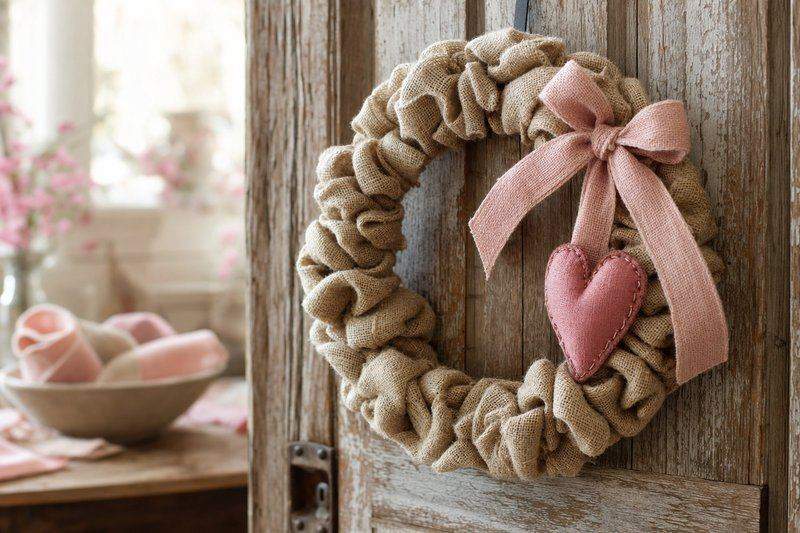
Burlap has a texture that reads as warm and homemade even before anything else is added, which is why it pairs so well with a soft color like blush pink or red for this seasonal Valentine’s Day piece. This burlap Valentine wreath uses one continuous ribbon technique that’s forgiving for a first attempt, plus a simple fabric heart that needs no sewing at all.
What You Need
- A wire wreath form, 12 to 14 inches across
- Burlap ribbon, roughly 4 inches wide, about 6-8 yards
- A scrap of red, pink, or cream fabric for the heart accent
- Floral wire or pipe cleaners
- Scissors
- A hot glue gun (optional, for securing ends)
Burlap ribbon by the yard is inexpensive, and a single roll usually covers more than one wreath, which is most of what keeps this an easy, budget project. Nothing here is a specialty supply.
Step-by-Step: The Burlap Base
- Cut the burlap ribbon into 8-inch lengths, roughly 20-24 pieces depending on how full you want the finished wreath.
- Fold each piece in half to form a loop, and tie it directly onto the wire form with a simple loop-and-pull knot (the same motion as tying a shoelace loop, just around the wire instead of through a hole).
- Push each knot close against the last one as you go around the ring, so the burlap loops fully hide the wire form underneath.
- Continue around the entire ring until it’s fully covered, fluffing each loop outward slightly as you go for texture.
This looped technique is more forgiving than trying to wrap one continuous length of ribbon around the form, since any uneven tension in one loop doesn’t throw off the ones next to it.

Adding the Fabric Heart Accent
- Cut two heart shapes from your fabric scrap, about 5 inches across at the widest point.
- Place them together, fabric-right-sides facing out, and simply pinch and twist a small amount of floral wire through the center of both layers to hold them together, no sewing or gluing required for a raw-edge, deliberately rustic look.
- Wire the heart directly onto the wreath, either centered at the bottom or slightly off to one side, using the same floral wire looped through the wreath form.
- If you’d rather have clean edges instead of a raw, frayed fabric look, a line of fabric glue around the heart’s edge before wiring it on will stop fraying without changing the shape.

Finishing Touches
A small bow made from a leftover length of the same burlap ribbon, wired on near the heart, ties the two elements together visually. Small faux berries or a scattering of fabric rosebuds, hot-glued in around the heart, add color without much extra effort if you want the wreath to read a little fuller.
Choosing the Right Burlap Weight
Burlap ribbon comes in a few different weights, and it makes a real difference in how the finished loops sit. A lighter-weight burlap is easier to tie and fold into a tight, clean loop, but it also flattens more over time and can look a little limp after a few weeks on a door. A heavier, stiffer burlap holds its loop shape longer without any extra reinforcement, which is worth the small price difference if the wreath is meant to stay up through the whole season and not just a single event. If only a lighter-weight ribbon is on hand, a light misting of clear spray starch before tying the loops adds enough body to help them hold their shape better.
Variations Beyond the Basic Heart
The looped burlap base underneath this wreath works as a starting point for more than one Valentine’s Day look:
- Layered hearts: stacking two or three fabric hearts in graduating sizes, all wired together at once, adds dimension without much extra effort.
- Scattered mini hearts: instead of one large heart, several small fabric hearts wired in at different points around the ring gives a more playful, less symmetrical look.
- Ribbon-only accent: skipping the fabric heart entirely and using a cluster of smaller bows in different shades of pink and red keeps the whole wreath simpler to make while still reading clearly as Valentine’s-themed.
- Mixed-material accent: a small wood or felt heart cutout, glued on in place of wired, is an easy swap if fabric isn’t on hand.
Troubleshooting Common Problems
A few issues come up more than others with this specific technique, and each has a quick fix:
- Loops slipping loose over time. This usually means the initial knot wasn’t pulled tight enough. Untie and retie with a firmer pull, or add a small dot of hot glue at the base of any loop that keeps loosening.
- Uneven coverage around the ring. Working loops in small batches of four or five at a time, checking coverage as you go, catches gaps earlier than tying all the way around before stepping back to look.
- Fraying fabric heart edges spreading further than intended. A thin line of clear fabric glue or a fray-check product along the cut edge, applied before wiring the heart on, stops any further fraying without changing the raw-edge look.
Pairing With Other Valentine’s Décor
A burlap Valentine wreath reads best when it isn’t the only Valentine’s touch in a room or entryway. A few small fabric hearts, cut from the same or a coordinating fabric as the wreath’s centerpiece, scattered on a mantel or table nearby ties the look together without much extra effort. A single strand of small string lights woven loosely behind the wreath (checked for battery placement so cords stay hidden) adds a soft glow for an evening porch display without overwhelming the handmade, rustic feel of the burlap itself.
Reusing the Base for Other Seasonal Occasions
The looped burlap technique itself isn’t tied to Valentine’s Day at all, which makes this a good base to reuse across the year for other seasonal wreaths. Swapping the fabric heart for a different seasonal accent, wired on the same way, turns the same burlap ring into a new project without redoing the time-consuming looping step.
Hanging and Storage
A ribbon loop tied through the top of the wire form or a basic over-the-door wreath hook both work well, since burlap is light enough not to need a heavier hanging method. Between seasons, a large plastic bag keeps burlap from collecting dust, and the loose looped construction means the wreath compresses down small for storage without losing its shape once it’s hung back up.