Modern, Simple Summer French Tip Nail Designs
8 min read ·
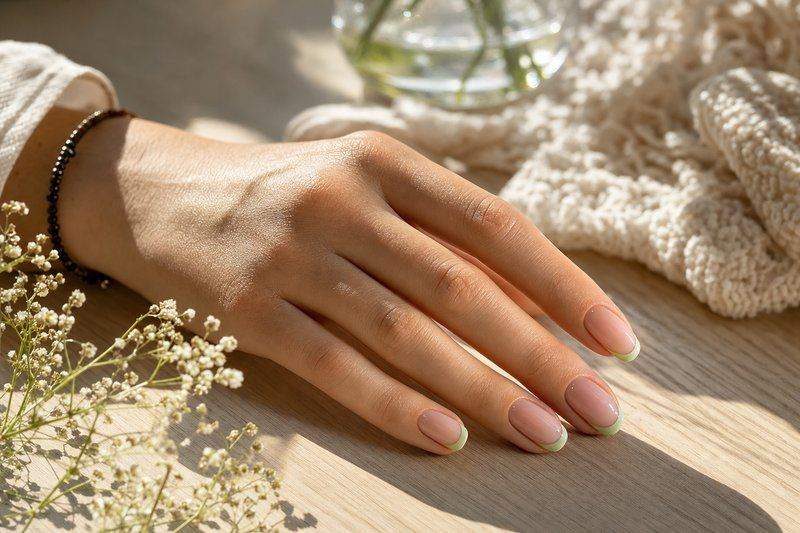
The french manicure has been reinvented so many times over the last few summers that “classic white tip” is really just one option among dozens now. Modern summer french tip nail designs swap the white line for color, change the angle, or shrink the tip down to a thin edge, the structure stays the same, but the finish feels current instead of dated. None of the variations below need salon-level precision. A few tools and a little patience get you there.
What Makes a French Tip “Modern” Right Now
The traditional french tip is a straight or slightly curved white line across the free edge, over a sheer pink or nude base. Modern versions keep that same basic shape but change one variable at a time: a colored tip instead of white, a diagonal line instead of a straight one, or a much thinner tip that reads as a hairline where a thicker one reads as a bold cap. Simple changes like these are what separate a look that feels current from one that reads as a throwback. You don’t need to reinvent the whole manicure, just update the details.
Simple Tools That Make Clean Tip Lines Easier
A shaky freehand line is the single biggest reason french tips look amateur. A few inexpensive tools fix that almost immediately:
- French tip guide stickers, thin adhesive strips that mask off the tip shape, so you paint over the sticker and peel it away for a crisp edge
- A thin striping brush, for anyone doing it freehand, a brush with a fine point gives far more control than the wide brush that comes with most polish bottles
- A dotting tool, useful for diagonal or curved tip lines, since you can build the line from small dots and blend them, with no continuous stroke to drag
Guide stickers are the simple starting point if this is your first time: they remove almost all of the difficulty that makes people avoid trying a french tip at home.
Color-Swapped French Tips for Summer
Swapping the white tip for a summer color is the easiest way to update the look without changing the technique at all:

- Coral or terracotta tips over a sheer nude base, reads warm and sun-kissed
- Sky blue or seafoam tips over a milky white base, a cooler, beachier variation
- Butter yellow tips over a soft pink base, a trendy pastel pairing that photographs well
- Black or espresso tips over a warm nude base, a moodier, more editorial take that still reads as a french manicure
Any of these work with the same guide-sticker method as a classic white tip, only the tip color changes.
Diagonal and Angled Tip Lines
A straight-across tip line is the most traditional shape, but a diagonal line, angled from one side of the nail to the other, is a simple update that instantly reads as more modern. It photographs well on almond and oval nail shapes especially, since the diagonal line follows the natural curve of the nail bed. To get a clean diagonal, apply the guide sticker at an angle instead of straight across, or paint the line freehand starting from one corner and pulling toward the opposite side in one motion.
Trendy Micro-French and Reverse French Variations
Two variations are especially popular in current nail trends:

- Micro-french, a very thin tip line, sometimes just 1-2mm, that reads as a delicate accent. Best with a fine striping brush over a wide guide sticker.
- Reverse french, the color band sits at the base of the nail (the smile line) instead of the tip, essentially flipping the traditional placement. This trendy variation pairs especially well with shorter nails, since it draws the eye toward the cuticle and away from nail length.
Both variations use the same base-coat-plus-topcoat foundation as a standard manicure, only the placement of the color band changes.
Nail Shapes That Suit a Modern French Tip
The shape underneath a french tip changes how the whole design reads. A squoval or square shape gives a straight tip line the widest, cleanest surface to work with, which is part of why the traditional french tip was originally designed around that shape. An almond or oval nail curves the tip line naturally, which suits a diagonal or slightly rounded tip better than a perfectly straight one. Coffin-shaped nails, being flat across the free edge, work especially well with a bold colored tip since the wide flat area gives the color band room to be a real visual statement. If you’re planning a simple micro-french, a shorter length in any shape keeps the thin line from looking lost against a long nail bed.
Common Mistakes That Make a French Tip Look Dated
A few small habits separate a modern french manicure from one that reads as stuck in an earlier decade. A very thick, stark-white tip against a heavily opaque pink base is the classic dated combination. Softening the base to something sheer and swapping stark white for an off-white or a color instantly modernizes it. Painting the tip line too far down toward the middle of the nail, and not close to the actual free edge, is another common issue that makes the proportions look off. And skipping the topcoat over the tip line specifically (not just the whole nail) is what causes that edge to chip first, since it’s the most exposed part of the design.
Getting a Long-Lasting Summer French Tip
French tips are more prone to visible wear than a single-color manicure, mostly because any chip along that crisp line is immediately obvious. A few habits help:
- Cure or dry each layer fully before starting the next, especially the tip line itself
- Run the topcoat over the very edge of the nail, not just across the top surface, since that’s where chipping usually starts first
- Reapply a single fresh topcoat layer around day three or four, before any visible wear
- Wear gloves for dishes and cleaning: hot water and detergent soften polish from underneath faster than daily wear does on top, which matters even more for summer french tip nail designs than for a single-color manicure, since the tip line is the first place any softened edge shows